“Everyone has some kind of philosophy, some general worldview, which to men of other views will seem mythological.” – H. Richard Niebuhr
The role of religious studies is to give language and understanding to our beliefs, thoughts, and ideas. We all approach life with a particular worldview, often we are not aware of this, but religious studies challenges us to consider what we think and why. In realising our starting point, we then recognise that others, similarly, have their starting point, that may be different. This realisation brings understand of other people and hopefully tolerance. We do not have to all think the same, but to understand that others think differently for equally good reasons means we gain respect.
Students studying religious studies will be challenged both in the way they think and about their views. Hopefully they develop the skills that enable them to be critical and questioning about themselves and others.
Key information:
GCSE Specification
A Level Specification
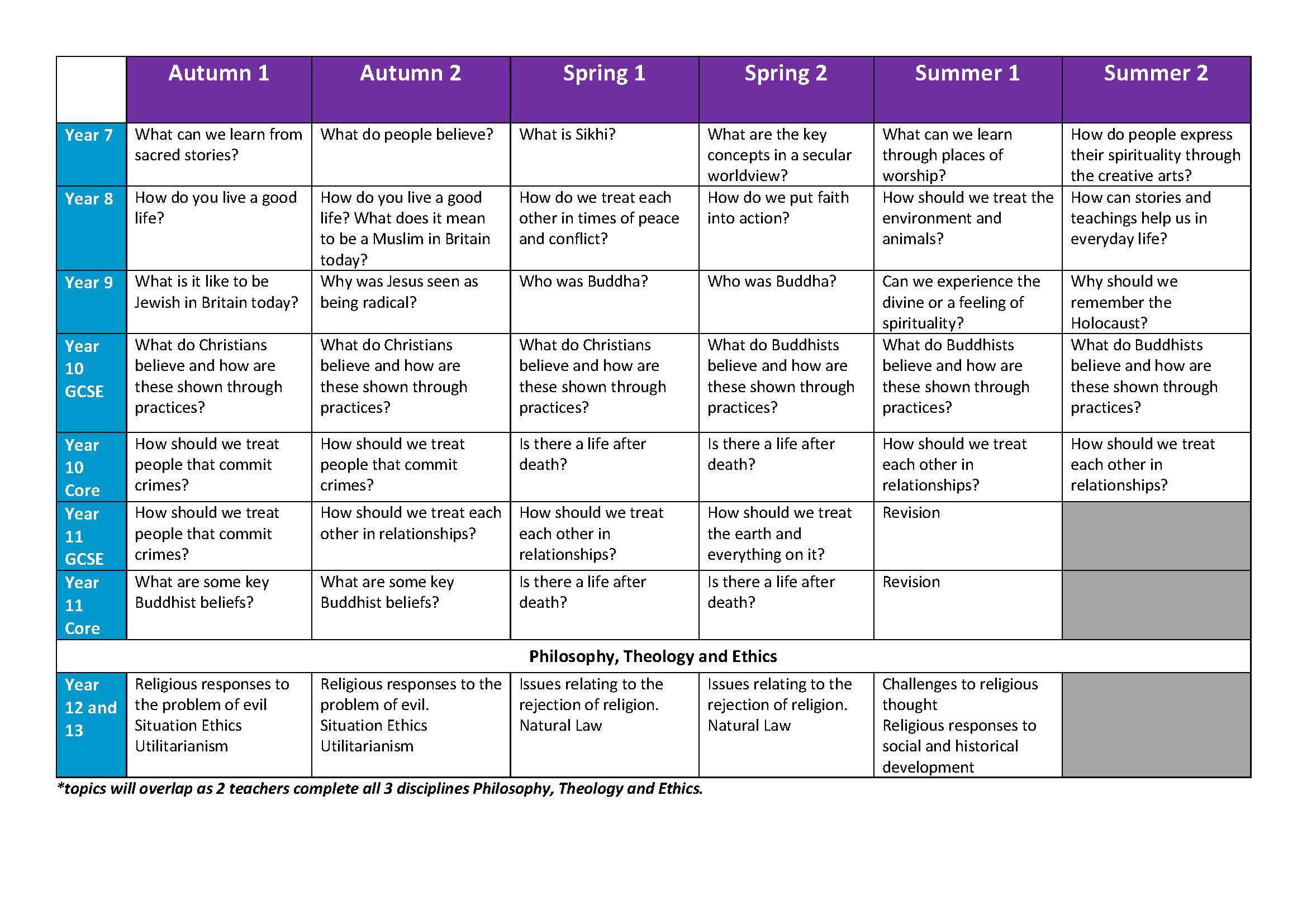
Curriculum Progression
Religious Studies at Magnus is based on three disciplines, Philosophy, Social Science and Theology. It is also taught through an enquiry question model. Each year has an over-arching enquiry question, each term then has its own question, and each lesson has its own, feeding up through the terms and years.
Key Stage 3
Year 7 EQ: What is Belief?
Year 8 EQ: How do you live a ‘good’ life?
Year 9 EQ: What gives life meaning?
Key Stage 4 (GCSE)
At GCSE, students consider Christian and Buddhist worldviews, this allows them to see a contract between different faiths. We also look at religion and relationships, belief in God and matters of life and death.
Key Stage 4 (Core)
Core Religious Education at Key Stage 4 provides students with the opportunity to explore some significant ethical, philosophical and contemporary issues facing individuals and society today. Through discussion, debate and reflection students develop the knowledge and skills needed to understand a range of worldviews and considering their own beliefs, values and responsibilities. Students are encouraged to think critically, evaluate different perspectives, challenge assumptions and engage respectfully with views that may differ from their own. Topics are linked to real world issues such as crime and punishment and relationships, helping students become informed, compassionate and reflective people who are prepared for life beyond school.
Key Stage 5 (A Level)
At A Level, students study the same questions in greater depth, building on what they have previously studied. The three components to the course are theology (Christianity), philosophy and religious ethics.
Students develop skills that allow them to select and deploy relevant information and to evaluate the strengths of differing arguments about religious figures and sacred texts; ethical theories, religious experience and language.
Curriculum Plan